How clinical content moves from a source into a pharmacy workflow
This page documents the product's evidence-governance process. It identifies what the system is designed to do, what remains the responsibility of qualified reviewers and which claims are deliberately not made.
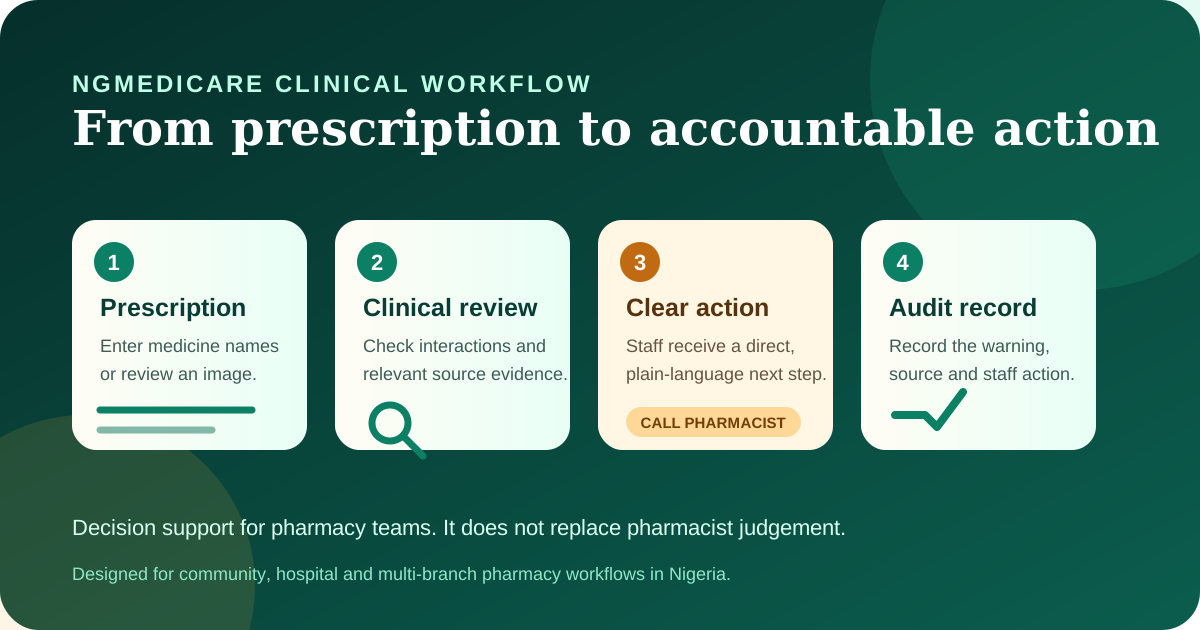
NgMedicare product facts
- Content owner
- NgMedicare product team
- Current market scope
- Nigeria and Kenya with separate country tags and retrieval boundaries
- Source model
- Shared clinical references plus country-specific medicines, supplies and regulatory material
- Rule preference
- Deterministic actions for high-risk workflow decisions
- Review status
- Controlled-pilot product content; qualified local clinical review remains required
- Correction route
- Source or product concerns can be raised through the configured support channel
1. Identify the source and scope
Each document is recorded with its title, market relevance and source role. A formulary, essential-medicines list, registered-product database and practice guideline answer different questions and must not be treated as interchangeable.
2. Apply country tags without overwriting shared evidence
Shared references can carry both Nigeria and Kenya tags. Country-specific documents retain their own market tag so retrieval can combine shared evidence with the correct local context.
3. Convert critical workflow rules into deterministic actions
Where a supported rule requires staff to stop and escalate, the response should not vary with model creativity. Generative models may help explain evidence, but they should not weaken a deterministic safety boundary.
4. Preserve traceability
A useful result identifies the source available to the system and keeps the warning and accountable action together. Source presence does not imply endorsement by a ministry, regulator, publisher or professional body.
5. Review editions and corrections
Source editions, local guidance and rule behavior require scheduled review. Material corrections should update the affected rule or document, record the change and trigger focused regression tests.
6. Keep responsibility visible
NgMedicare does not claim exhaustive medicine coverage, autonomous diagnosis, prescribing authority or guaranteed prevention of medication errors. A qualified pharmacist remains responsible for the complete patient-specific assessment.
Documents and authorities named on this page
These links identify the issuing or publishing source. Their inclusion does not imply endorsement of NgMedicare.
Frequently asked questions
Who clinically reviewed this page?
The NgMedicare product team maintains this product-governance description. No named pharmacist reviewer is claimed until that person's identity, credentials, scope and approval are verified for publication.
Does using an official source mean the issuer endorses NgMedicare?
No. Source use and source citation do not imply endorsement.
How are Nigeria and Kenya kept separate?
Shared references may carry both country tags, while local documents and inbound phone routing retain a single country scope.
Book a 15-minute Pharmacy Demo
We’ll walk through a real prescription scenario and show how interactions, warnings, and documentation appear in your workflow.
Evidence-backed clinical decision support for pharmacy teams.